
Joe Maring / Android Authority
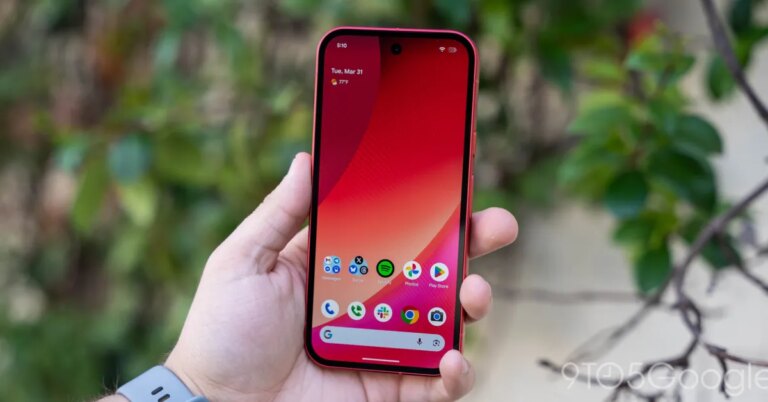
A clean Android experience is one of the key selling points of Pixel phones. Unfortunately, this “clean experience” is often misunderstood as barebones. Sure, other flavors of Android (like One UI) take the cake with their extensive feature set and customization options, but the Pixel UI is no slouch either.
If you’ve used a Pixel phone, you know exactly what I’m talking about. In fact, you probably already use some of the signature features like Now Playing, Magic Editor, Call Screen, and Pixel Screenshots every day. However, you’d be surprised to know that there are still plenty of Pixel features you might not be using.
Some of these features are hidden in plain sight, whereas others are tucked away in the Settings app. Let’s go over these lesser-known Pixel features and see how you can use them to improve your Pixel experience.
28 votes
I’m a huge fan of the iPhone’s Back Tap feature. It lets me double-tap or triple-tap the back of my iPhone to quickly perform certain actions, and I’ve gotten so used to it that it has fundamentally changed how I do some of the things — like capturing screenshots — on my phone.
Thankfully, Google offers a similar feature on Pixel phones. It’s called Quick Tap, and it turns the back of the phone into a virtual button that you can double-tap to trigger your favorite action. I’ve configured Quick Tap to take a screenshot. This lets me take quick screenshots, even when I’m using my phone one-handed. At times, I set it to open Simplenote for quick note-taking.
To set up Quick Tap on your Pixel phone:
You can also launch your favorite app with Quick Tap. Choose Open app, tap the gear icon next to it, and select an app. Some apps even let you jump straight to specific screens, like the Camera app, which you can open directly in video or selfie mode.
As someone with too many apps on my phone, I receive an overwhelming number of notifications every day, despite turning off notifications for less critical apps. On numerous occasions, this has led me to instinctively clear the notifications panel using the Clear all button, only to realize later that I had accidentally cleared notifications for important WhatsApp messages.
To enable Notification history on your Pixel phone:
Now, when new notifications arrive, they’ll appear here. Follow the above steps or tap the history button in the notification panel to navigate to this screen.
I prefer keeping my phone in silent mode most of the time, except when I’m out at my gym or badminton court. This means every time I head to either place, I need to switch my phone to ring mode so that I don’t miss an important call from home. However, there have been times when I forgot to do so and ended up with multiple missed calls.
That’s when I decided to give the Rules feature a shot. Rules allow you to automatically change some of your phone’s settings based on the Wi-Fi network it’s currently connected to or the current location. For example, you can set up a rule to automatically turn on silent mode when your phone connects to your office Wi-Fi. Or you can put your phone into Do Not Disturb mode as soon as you arrive at home.
Setting up Rules on a Pixel phone is easy:
Now, every time the rule runs, it’ll send you a notification. You can change this behavior by unchecking the Send notification when rule takes effect checkbox.
Staying focused with our phones around is challenging, thanks in part to the notifications that our apps push all the time to grab attention. Even if you manage to resist checking them somehow, the sound or vibration alert is enough to throw you off. Thankfully, Pixel phones have a built-in feature called Modes that helps you limit such distractions.
Modes is similar to the Focus feature on iPhones and lets you decide notifications from which apps and people can come through when a mode is active. For example, I’ve configured the Driving mode to ensure I only receive notifications from select apps and contacts. Likewise, I’ve configured the Bedtime mode, too, where, in addition to configuring notifications, I’ve turned on the grayscale setting to limit exposure to blue light and the urge to pick up my phone and scroll through social media apps.
You can also create a custom mode with Modes — as I did. I’ve named it Work and scheduled it to remain active from 9 AM to 6 PM Monday to Saturday. Besides setting it up to allow calls and messages from select contacts, I’ve turned off notifications for all apps except Slack, Google Chat, and Asana to keep up with work updates when I’m not at my desk.
You can set up Modes as shown below:
A phone’s haptics can make or break the user experience. Too weak, and you miss notifications. Too strong, and you’re left startled. For example, when I keep my phone on the bedside table at night, I want the vibration strength to be mild so that it doesn’t disturb my sleep. On the other hand, I want it at full strength when I’m riding a bike so I don’t miss an important call.
This is where Adaptive vibration comes in handy. It uses your phone’s microphone and sensors to detect whether the phone is in your pocket, a bag, or on a flat surface and adjusts the vibration strength accordingly. Google says the microphone audio is processed on the device and automatically deleted after a while.
Here’s how to enable Adaptive vibration:
The auto-rotate feature on our phones has an annoying problem: it flips the screen orientation when you try using it in bed, lying sideways. You see, our phones use an accelerometer to detect the orientation and switch between portrait and landscape orientation accordingly. While this works fine most of the time, when you lie down on your bed sideways and try to use your phone in portrait orientation, it thinks the phone is rotated and switches to landscape orientation.
Google employs a clever trick to fix the problem on Pixel phones. It uses face detection to determine your face’s orientation relative to your phone, so it can switch between orientations more accurately. The feature works like magic and lets you use your phone in bed lying sideways, though its reliability takes a hit when the room is too dark.
Follow these steps to turn the feature on:
We’ve just scratched the surface here. Pixel phones have plenty of other hidden features and settings worth exploring, such as Clear Calling, Flip to Shhh, Private Space, and app pinning. However, it’s disappointing to see these lesser-known — yet useful — features not getting the attention from Google’s marketing team they deserve.
Don’t want to miss the best from Android Authority?


Thank you for being part of our community. Read our Comment Policy before posting.


Leave a comment