
ⓘ LilyGo
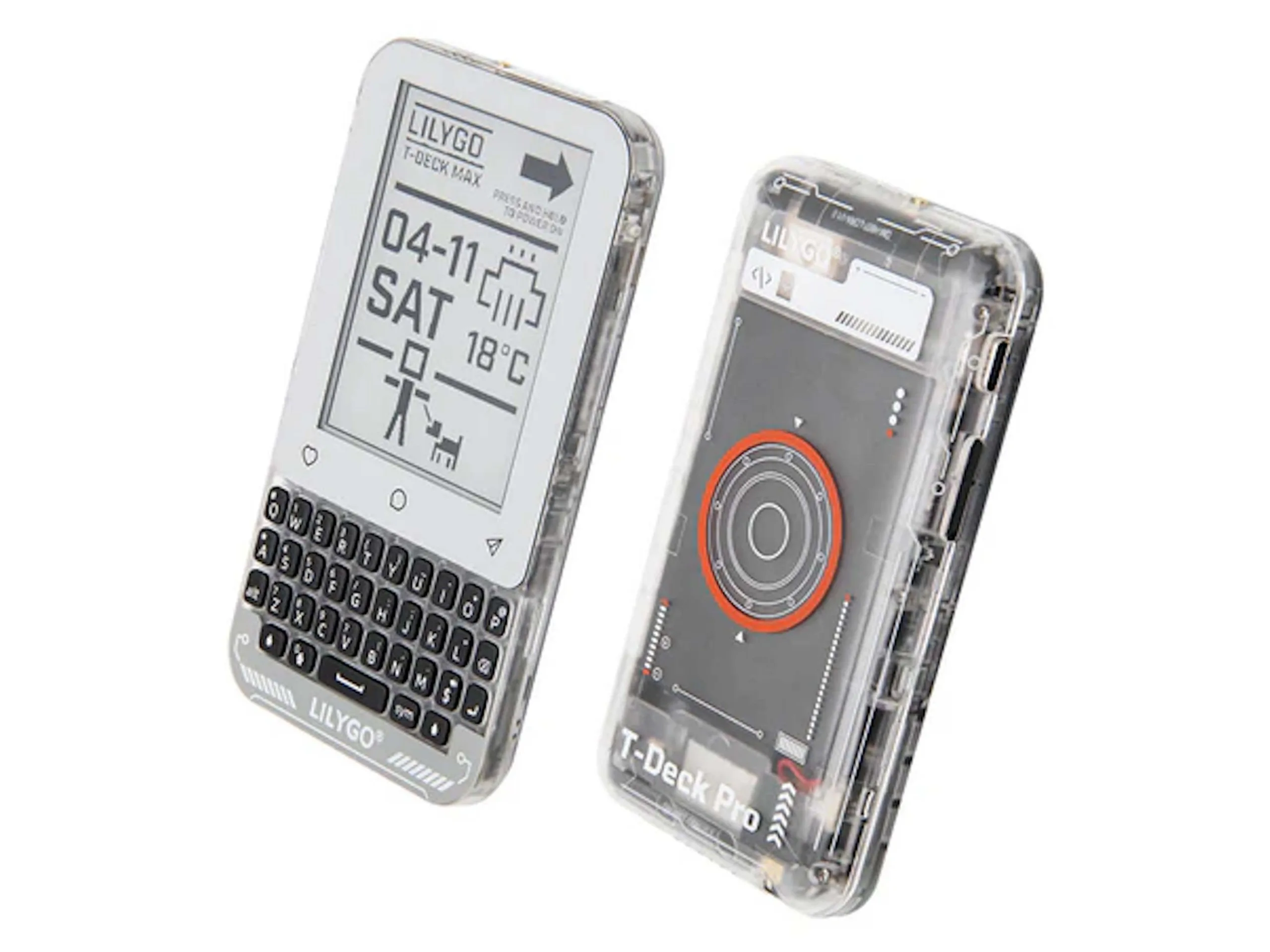
The T-Deck Max is a new mobile device, or at least a new version of LilyGo’s T-Deck. It can broadly be approached like a smartphone, although the system does not run Android and is not necessarily a fully preconfigured product that is ready for end users out of the box. Instead, the model is likely aimed more at tinkerers. An ESP32-S3 is used as the main board, which limits performance. In practical terms, the system could be used to exchange data or messages.
This opens up possibilities that a regular smartphone does not offer. The LilyGo T-Deck Max supports LoRa, which can be used to transmit relatively small amounts of data entirely independently of a cellular network. A GPS module is included, so location data can also be transmitted. This means the T-Deck Max could potentially be used on a large factory site as a personal emergency signaling device, for example. LoRa repeaters can then extend the effective range between such handhelds. A 4G connection is optionally available.
It uses a 3.1-inch display with a resolution of 320 x 240 pixels. The screen is based on an e-ink panel and should not consume much power. Additional sensors and actuators can be connected, and there is a microSD card slot. A microphone and speaker are already included, and programming can also be done using the Arduino or PlatformIO IDE. A keyboard is included, which should make it relatively easy to enter text directly. The T-Deck Max is listed by the manufacturer for around $110, and previous T-Deck models have also become available at some specialized retailers.

I have been active as a journalist for over 10 years, most of it in the field of technology. I worked for Tom’s Hardware and ComputerBase, among others, and have been working for Notebookcheck since 2017. My current focus is particularly on mini PCs and single-board computers such as the Raspberry Pi – so in other words, compact systems with a lot of potential. In addition, I have a soft spot for all kinds of wearables, especially smartwatches. My main profession is as a laboratory engineer, which is why neither scientific contexts nor the interpretation of complex measurements are foreign to me.

My fascination for technology goes back a long way to the Pentium II era. Modding, overclocking and treasuring computer hardware has since become an integral part of my life. As a student, I further developed a keen interest in mobile technologies that can make the stressful college life so much easier. After I fell in love with the creation of digital content while working in a marketing position, I now scour the web to bring you the most exciting topics in the world of tech. Outside the office, I’m particularly passionate about motorsports and mountain biking.

Leave a comment