The iPhone 17e is as repairable as the very similarly-constructed iPhone 16e, to the point where you could transfer the MagSafe-equipped rear glass into its non-MagSafe predecessor.
The traditional third-party teardowns following Apple’s hardware releases usually show where the company has made big changes to its product designs. In the case of the iPhone 17e, the latest by the repair mavens at iFixit also shows just how similar it is to the previous model.
When Apple introduced the iPhone 17e, the overall design was close to a carbon copy of the iPhone 16e, with some component changes and the inclusion of MagSafe support. The iFixit teardown proved that to be just the case.
Pointing out the day-one repair manual access, the repair outfit started to take the iPhone 17e apart by heating the back glass to loosen the adhesive. Once loosened, the glass needed a single press connector to be disconnected for it to be freed.
That connector handled the power from the wireless charging and rear flash assembly in the back glass.
The disassembly continued with the now standard electrically-releasing adhesive for the iPhone battery, pulling press connectors for the camera assemblies and undoing screws. While some were in awkward angles, the screw-heavy disassembly continued until all of the parts were separated.
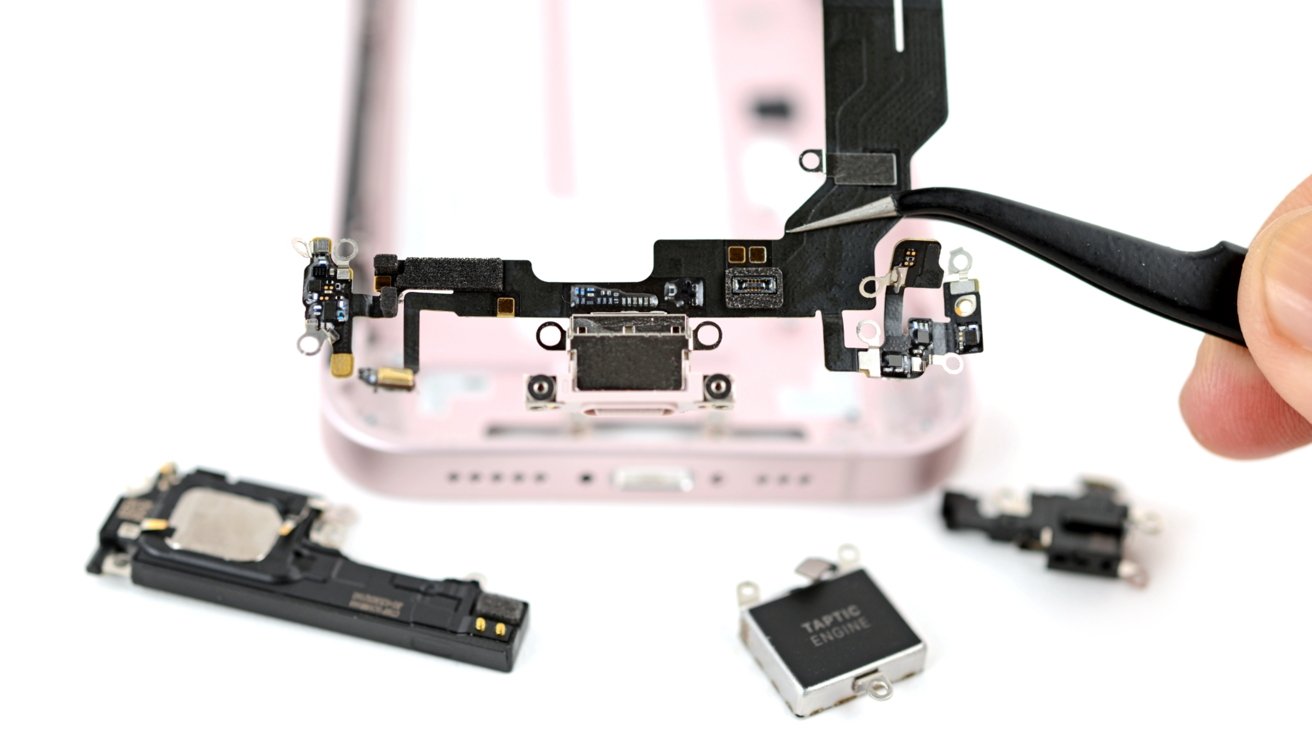
Pulling components from the iPhone 17e – Image Credit: iFixit
Looking closer at the parts, the team was able to spot the new A19 System on Chip replacing the A18 from the iPhone 16e. The bigger change of significance was the C1X modem, which Apple says saves power while also being twice as fast as the old modem.
The back glass, which houses the wiring, also includes the Qi2-compatible MagSafe magnet charging ring.
One interesting thing that iFixit observed was how interchangeable the components were with the iPhone 16e. Almost every component between the two smartphones was cross-compatible, to the level that you could put the iPhone 16e’s logic board into the iPhone 17e’s chassis without issue.
In testing just that, the teardown discovered the system registers the transposed parts fine, with the Repair Assistant configuring most elements without issue.
This also included, unexpectedly, the MagSafe wireless charging. The iPhone 16e didn’t have the software to recognize the MagSafe element, so there was no “thunk” animation.
But even so, it still charged. Further testing will determine if it will charge at the new 15W rate when hooked up with the iPhone 16e’s components.
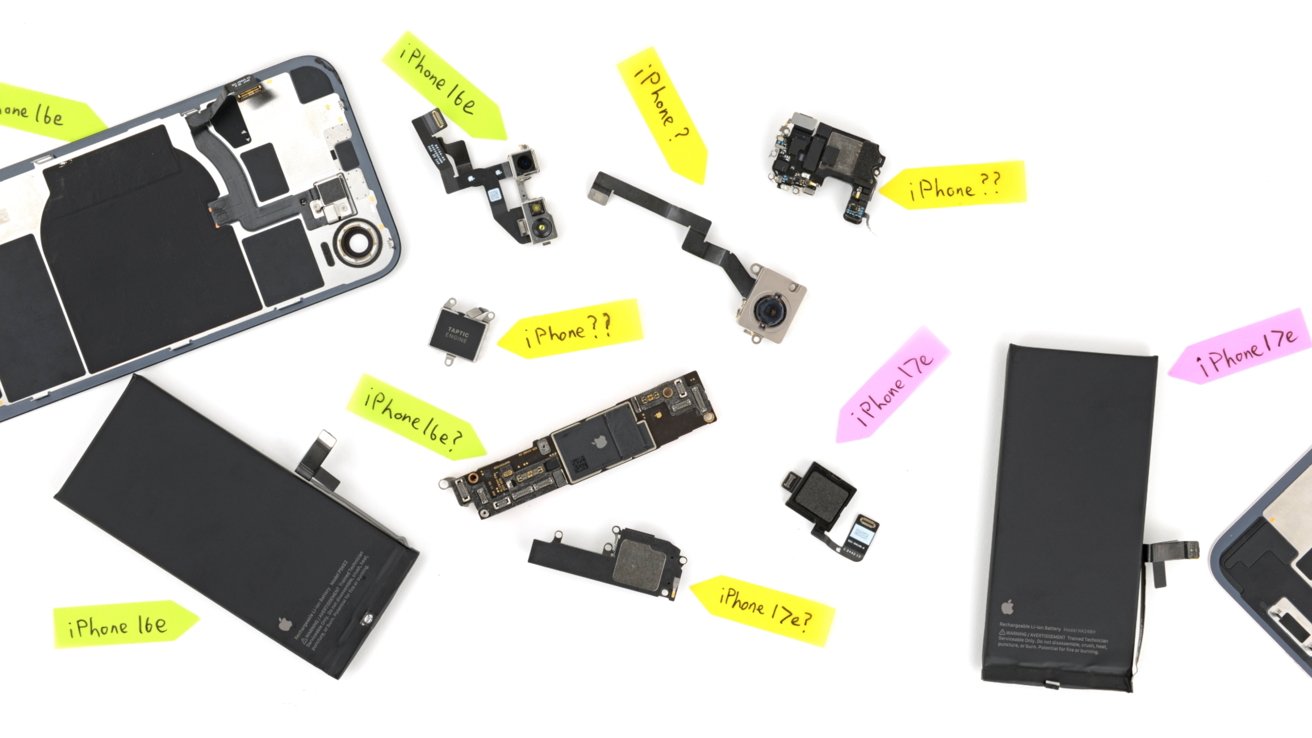
Many iPhone 16e components worked in the iPhone 17e chassis and vice versa – Image Credit: iFixit
The only real exception to the switching around testing was the TrueDepth camera, which enabled Face ID. While you can use it as a camera, the Face ID element was simply not usable when the components were switched.
In summing up its thoughts, iFixit was encouraged by the parts interchangeability, calling it a boon for repairs and upgrades. However, it was still frustrating to see Apple fix the issue of a buried USB-C port in the logic board in the iPhone 16, but not make the same change for the e-series model.
Overall, the iPhone 17e was given a “repairability” score of 7 out of 10, equal to the iPhone 16e.



Leave a comment