The Oppo Find N6 has two LTPO OLED panels – one for the cover screen and one for the foldable display. Both offer over 400ppi density, 120Hz refresh rate, support 10-bit color depth, HDR10+ and Dolby Vision streaming.
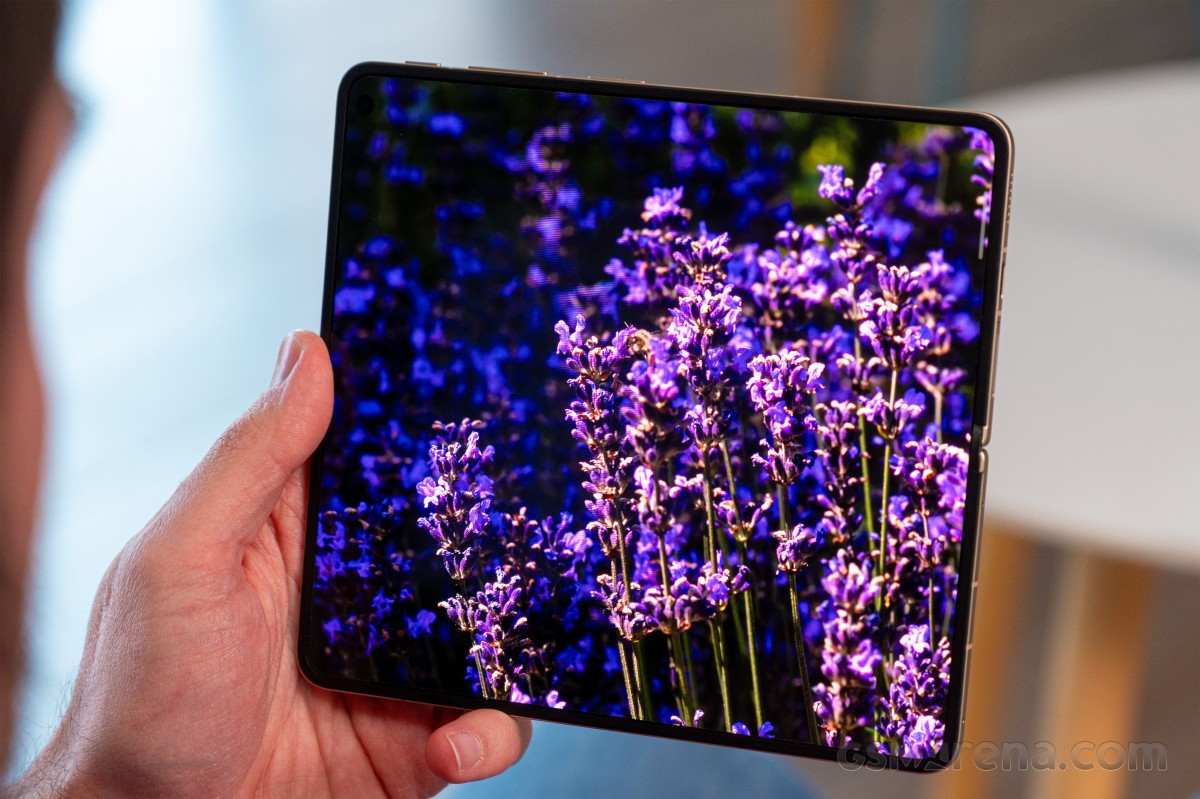
Other notable features include 2,160Hz PWM dimming, adaptive color tone, and Ultra HDR image support.
Both displays on the Find N6 are compatible with the Oppo AI Pen, but you do have to buy the stylus separately.
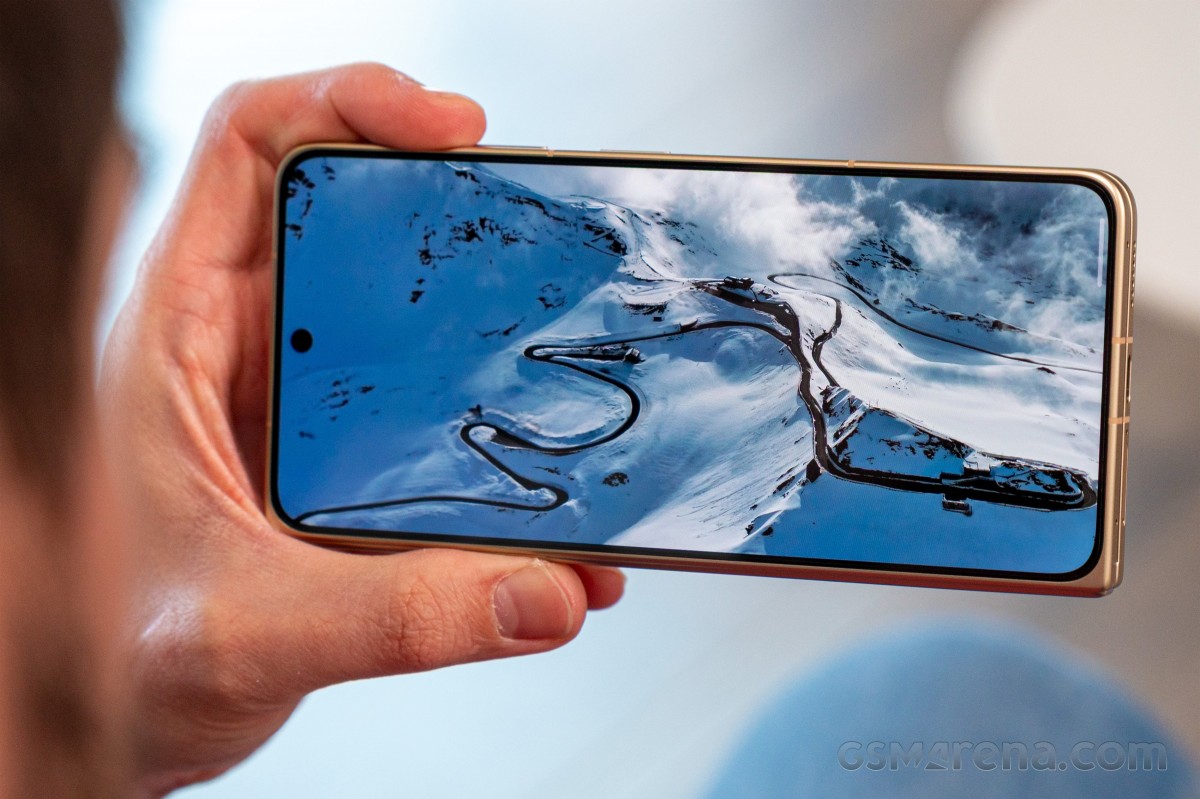
The cover display relies on a 6.62-inch LTPO OLED panel with 1,140 x 2,616 pixels (431ppi). It has a nanocrystal protective glass. Oppo has listed 600nits for typical, 1,800nits for maximum automatic, and 3,500nits for peak brightness.
The foldable screen uses an 8.12-inch LTPO OLED panel with 2,248 x 2,480 pixels (412ppi). It has a new protective layer with self-healing properties, and the whole thing sits on top of an improved hinge enhanced to deliver a zero-crease look and feel. The official brightness numbers are also 600nits for manual and 1,800nits for maximum automatic, but the peak brightness here is lower at 2,500 nits.
Naturally, we put the Find N6 through our standardized max brightness tests, and the numbers are in!
On the cover screen – we measured 578 nits for manual, 1,176nits for maximum auto, and 1,289nits for peak brightness. Like on other Oppo phones, the gallery offers brightness boost – the automatic brightness here went up to 2,086nits and the peak brightness – up to 3,177 nits.
On the foldable screen – we captured 607nits of manual, 901nits of automatic, and 1,351nits of peak brightness in the web browser. Like on other Oppos, the measurements in the gallery are higher – 1,586nits for automatic and 1,877nits for peak brightness.
Obviously, taking into consideration the brightness in the gallery, we can say the numbers are not that far from the official promises. But it’s a bit odd that we are able to achieve these brightness numbers only in selected apps.
Don’t get this the wrong way – both screens are doing a fine job under a bright light, and we never had a hard time using them. But other popular foldables, like the Z Fold7 and vivo X Fold5, are certainly doing better.
Finally, the last bit of our test is about the minimum brightness – it’s just 1 nit on both screens.
Refresh rate
There are three refresh rate modes to choose from as part of the Settings menu – Auto, High, and Standard.
Auto and High both use 120Hz for the interface and most compatible apps. No matter which of these two modes you are using, the refresh rate is super dynamic depending on the content – 60Hz, 50Hz, 30Hz, 15Hz, 10Hz, and so on.
The Standard mode caps the maximum refresh rate at 60Hz, but the screen remains as dynamic as when using the other modes.
Oddly, we never saw the screen choose 1Hz, but this could be an issue with the system refresh rate reader.
HDR and streaming
Both displays support HDR10, HDR10+ and Dolby Vision, as well as HDR Ultra image. They are successfully recognized and utilized properly by all compatible apps, Netflix included.
The Find N6 is powered by a 6,000mAh Si/C batter – similar capacity to the Honor Magic V5 battery and larger than the Galaxy Z Fold7.
First, we did our battery life test on the inner display of the Find N6. It scored an outstanding Active Use Score of 15:45h, the best we’ve got so far from a large foldable. The on-screen tests – web and video streaming in particular- are thoroughly exciting.
We also ran our battery life test on the cover screen. The Find N6 once again aced our test by posting a score of 18:36h, another class-leading result. It did fabulously across all test scenarios.
The Oppo Find N6 supports 80W SuperVOOC (wired) charging as well as 50W AirVOOC (wireless) charging. The phone ships with the 80W SuperVOOC adapter and proprietary cable in most markets.
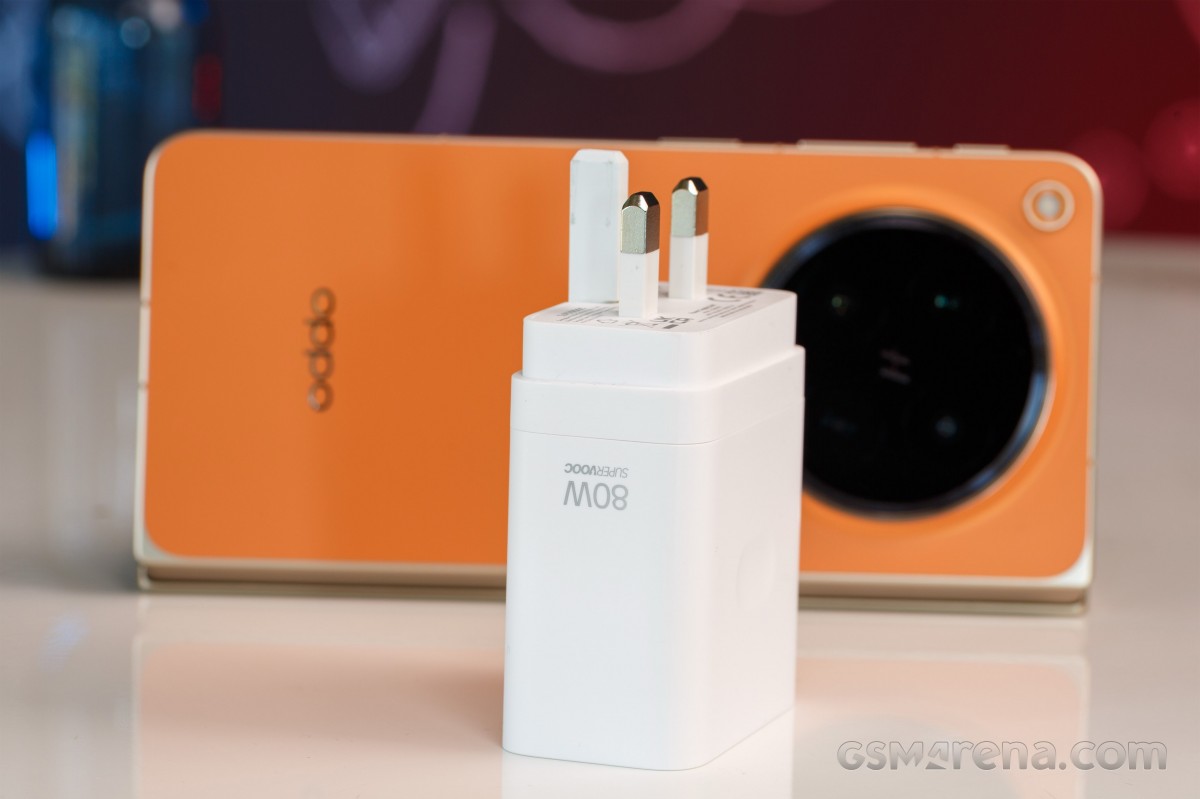
We used the bundled adapter for our charging speed test.
Like most foldables, the Find N6 recharges a bit slower when in the folded state to prevent overheating – you may even get a prompt to open it.
We carried out the charging test in both operation modes, and it’s safe to say the Find N6 offers a nicely fast charging speed.
When charging the unfolded phone, the battery went from 1% to 47% in 15 minutes, we captured 84% charge on the 30min mark, and full charge was reached in 46 minutes. Quite impressive!
In its folded state, the Find N6 slowed down the charging a bit – we got 38% in 15 mins, 68% in 30mins, and a full charge took exactly 50 mins.
The Find N6 offers Smart Rapid Charging option, which increases the charging speed but also makes the phone heat up a bit more. We kept this feature turned on so we can get the maximum possible charging power.
Bypass charging is available, too, which will come in handy if you are gaming while charging and don’t want the heat from the charging process to affect the chipset performance.
Smart charging and charging limit are options for those caring about how their battery is charged.
Reverse wireless charging is also supported; you have a shortcut inside the Quick Toggles for convenience.
The Oppo Find N6 has a pair of stereo speakers placed at the top and bottom (when folded). One of those is actually the earpiece, and it is a bit quieter.
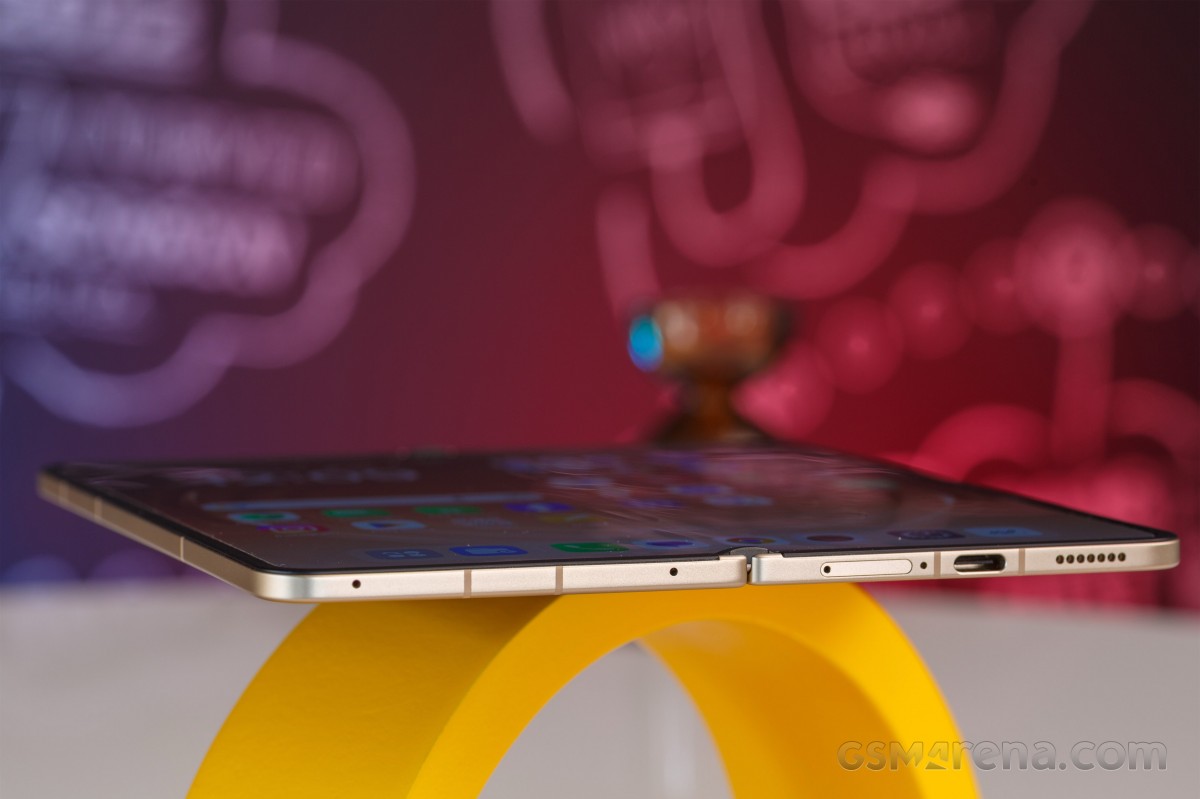
The two speakers scored an Average mark on our loudness test. The audio quality is somewhat average, too, with okay-ish presentation of low, mid, and high range, but the output could have been both richer and deeper. Now it’s shallow and lackluster.
Use the Playback controls to listen to the phone sample recordings (best use headphones). We measure the average loudness of the speakers in LUFS. A lower absolute value means a louder sound. A look at the frequency response chart will tell you how far off the ideal “0db” flat line is the reproduction of the bass, treble, and mid frequencies. You can add more phones to compare how they differ. The scores and ratings are not comparable with our older loudspeaker test. Learn more about how we test here.



Leave a comment